
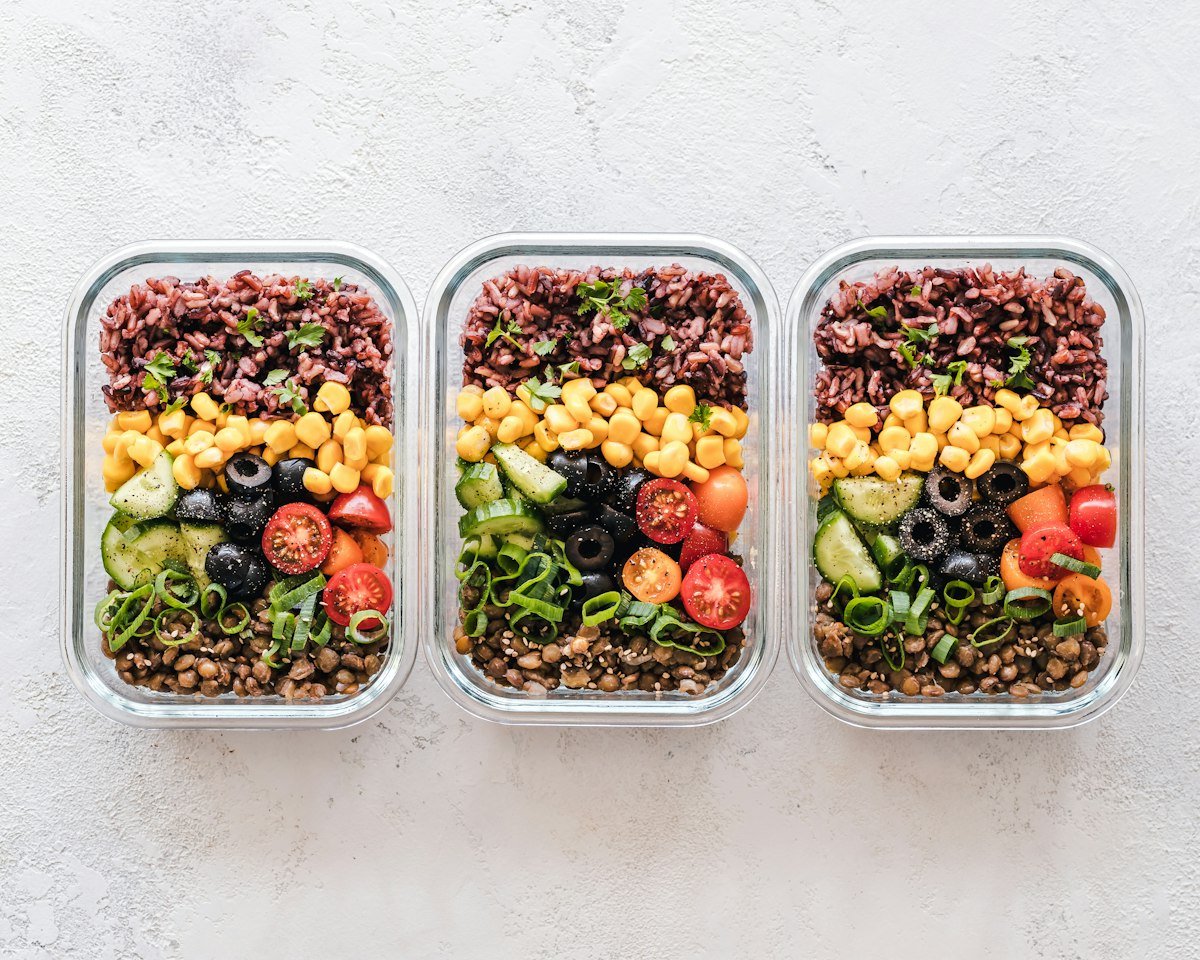
The first week of meal prep usually goes well. The second week is where it falls apart, because by Tuesday the food has gone grey, the rice has dried out, and the container in the corner of the fridge is quietly deciding its own future. None of that is a discipline problem. It is a planning problem, and it is fixable in about two hours on a Sunday.
Start with a protein target, not a recipe list
Most people open a recipe site and end up cooking seven different things, which is seven chances to fail. Flip the order. Decide how much protein you actually want to eat, then cook two or three proteins in bulk and build meals around them.
A reasonable starting point for most healthy adults is somewhere between 1.2 and 1.6 grams of protein per kilogram of body weight per day, which is the range commonly used in resistance-training and healthy-aging literature. Use the table below as a rough map rather than a prescription.
| Body weight | Daily protein at 1.2 g/kg | Per meal across three meals |
|---|---|---|
| 55 kg (121 lb) | 66 g | about 22 g |
| 65 kg (143 lb) | 78 g | about 26 g |
| 75 kg (165 lb) | 90 g | about 30 g |
| 85 kg (187 lb) | 102 g | about 34 g |
| 95 kg (209 lb) | 114 g | about 38 g |
One palm-sized portion of chicken, fish or lean meat is roughly 25 to 30 g of protein. Two eggs plus a cup of Greek yoghurt gets you most of the way there for breakfast without any cooking at all.
The two-hour framework
Two hours is enough to build five lunches if you cook in parallel instead of in sequence. The trick is that everything on the tray cooks while you are doing something else.
| Elapsed | What you are actually doing |
|---|---|
| 0:00 to 0:20 | Oven to 200 C. Tray one: chicken thighs or tofu, oil, salt, whatever hard vegetables you have (broccoli, carrots, courgette). |
| 0:20 to 0:45 | Pot of rice, quinoa or potatoes on the hob. Start tray two: a second protein cooked in a pan so it browns properly instead of steaming. |
| 0:45 to 1:15 | Make one sauce. This is the single highest-return twenty minutes in the whole session. |
| 1:15 to 1:45 | Everything onto cooling racks or open trays. Cooling before lidding is what stops the grey, wet texture people complain about. |
| 1:45 to 2:00 | Divide into containers, label, stack. Put Monday at eye level so the decision is already made. |
Three proteins, two bases, one sauce
- Protein one: lemon-and-garlic chicken thighs, roasted. They stay juicier than breasts and reheat better.
- Protein two: turkey or beef meatballs, or a baked block of firm tofu if you want a cheaper week.
- Protein three: a tray of eggs, a tin of tuna, or the leftovers from protein one. This is the Friday safety net.
- Base one: rice or quinoa. Base two: roasted potato or a box of salad leaves.
- Sauce: choose one that survives four days. Yoghurt-and-mustard, salsa, or a tahini-lemon sauce. Avoid anything mayo-heavy on the days you will not eat it soon.
A five-day template that does not bore you
| Day | Protein | Base | Change |
|---|---|---|---|
| Mon | Lemon chicken | Rice | Sauce A |
| Tue | Lemon chicken | Quinoa | Add a handful of salad leaves |
| Wed | Meatballs | Rice | Sauce B |
| Thu | Meatballs | Roasted potato | Add frozen peas, thawed |
| Fri | Tuna, tofu or leftovers | Salad | Whatever sauce is left |
Same two proteins, five meals that read as different because the base and the accompaniment change. This is the part people miss: variety comes from the base and the sauce, not from cooking five recipes.
Containers, cooling and safety
- Cool food to room temperature before sealing, but never leave it out longer than two hours.
- Sauces go in their own small pots. Sauce sitting under rice turns the whole container wet.
- Cooked protein keeps about four days in the fridge. Anything for Friday or later goes in the freezer.
- Glass stacks truer than plastic and does not hold onto the last week’s curry.
- Reheat once, only the portion you are about to eat. Repeated cooling and reheating is where texture and safety both degrade.
The four mistakes that kill week two
They cook too much of one thing. They season it once for all five days. They seal it while it is still warm. And they store the Friday container behind the milk where it dies of neglect. Fix those four and the habit survives past Wednesday.
This guidance follows standard USDA food-safety limits for cooked leftovers (refrigerate within two hours, eat refrigerated cooked meat within three to four days) and the 1.2 to 1.6 g/kg protein range used in mainstream resistance-training and healthy-aging research. Portion figures assume a 2,000 kcal reference intake; individual needs vary with age, activity and medical conditions.