
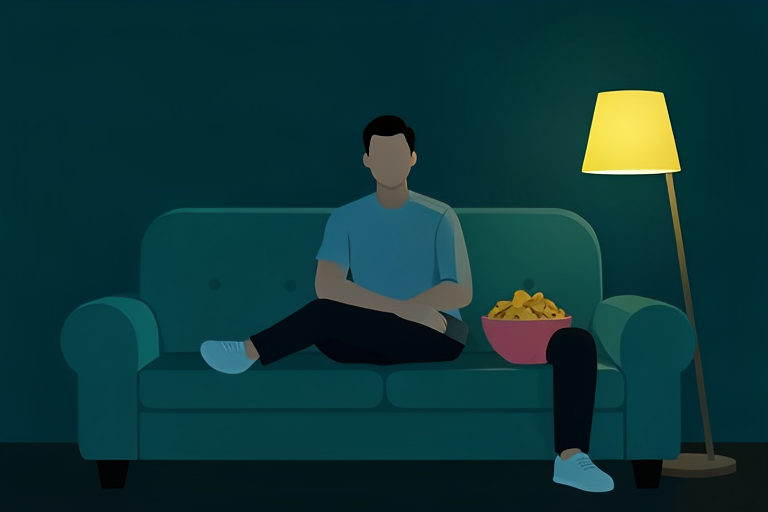
It’s 9:15 at night. Dinner ended forty minutes ago, you’re not hungry, and you’re standing in front of the fridge anyway. I used to call this a lack of discipline. It took me years to notice it was mostly a schedule problem, not a willpower one.
Why It Happens at 9 P.M. Specifically
Nighttime eating clusters for boring, fixable reasons. Under-eating at breakfast and lunch pushes the deficit into the evening. Meals low in protein and fiber leave blood sugar swinging back down within two or three hours. Dinner eaten at 5:30 leaves a fourteen-hour stretch where the body legitimately asks for food again by nine. And then there’s the layer that isn’t hunger at all: the kitchen is the only free room in the house after the kids are down.
Research on time-of-day eating is still thin, but the practical pattern is consistent in the records people keep: evening snacking tracks with total daily intake far more than with appetite.
The Fixes That Actually Work
Start with the day, not the evening. A breakfast with 25 to 30 grams of protein and a lunch that includes fiber keeps the 9 p.m. urge quiet in a way that willpower never does. I moved most of my protein to the morning and the midnight fridge visits dropped off within a week.
- Front-load protein. Aim for 25 to 30 g at breakfast, then repeat at lunch. Protein is the most satiating macronutrient per calorie, and our high-protein meal prep guide makes that a Sunday habit instead of a daily decision.
- Add volume to dinner. A big salad or a soup before the main plate reduces later grazing more reliably than a smaller dinner does.
- Set a kitchen closing time. Pick one, say 8 p.m., and make the rule about the kitchen, not about you. Brushing teeth right after works better than any app.
- Keep one approved option. A cup of herbal tea, or a small fixed portion like a square of dark chocolate. Total restriction fails; a defined exit works.
- Check sleep first. Short sleep raises ghrelin and cravings the next day. Fixing the 10:30 bedtime often fixes the 9 p.m. fridge visit, which is the same reason people wake up tired despite eight hours and then eat more the next day.
Is It Really the Food, or the Timing?
Weight management research keeps landing on the same point: total daily intake matters most, and meal timing matters mostly because it changes total intake. If you eat 2,100 calories spread across the day versus 2,100 with 600 of them after dinner, the second pattern is harder to hold, not because of some metabolic curfew but because evening eating is poorly monitored. Nobody weighs the popcorn at 9 p.m.
There’s a smaller literature on late eating and glucose control suggesting a modest effect from eating close to bedtime. It’s real but small, and it doesn’t rescue a bad daytime pattern. Anyone telling you to finish eating by 6 p.m. for hormonal reasons is selling the smaller effect while ignoring the bigger one.
A One-Week Protocol
- Days 1-2: write down everything, including the 9 p.m. bites. No changes yet. Most people underestimate evening intake by 300 to 500 calories.
- Day 3: raise breakfast protein to 25-30 g. Keep everything else identical.
- Day 4: add a defined closing time and one approved evening option.
- Days 5-6: move dinner 30 minutes later or add a starter, whichever fits the household.
- Day 7: review. Keep the two changes that reduced the snacking and drop the rest.
Two closing notes. The claim that late eating worsens weight control rests mainly on intake-tracking studies, where evening calories are the least recorded and most easily added, as summarised by the NIDDK’s weight-management guidance. And the protein target above comes from protein-leverage and satiety trials, not from a single food brand’s marketing.
What to Eat Instead at 9 P.M.
If the urge is real hunger rather than boredom, the fix is a small protein-forward option, not a restriction speech. Greek yogurt with a few berries, cottage cheese with cucumber, a boiled egg, a half-scoop of protein shake, or a small piece of cheese all take the edge off for 80 to 120 calories. Plain popcorn measured into a bowl – not eaten from the bag – works too, because the volume is high and the calories are boring.
The important part is the portion being decided before you’re hungry. Decide on Sunday what the evening option is, buy exactly that much, and the decision stops being a nightly negotiation.
Does Meal Timing Matter for Muscle?
If you train in the evening, there’s one legitimate reason to eat later: post-workout protein. A serving of 25 to 30 g within a couple of hours of training supports muscle protein synthesis, and that need doesn’t disappear because the clock says 8:30. The same logic shows up in our piece on how long before exercise results show up, where nutrition timing is one of the few variables you control outright. Train late, eat after, and stop counting it as snacking.
Worth separating two things people conflate: emotional eating and habitual eating. Emotional eating is a coping response with a recognisable trigger. Habit eating is just a route you have walked a thousand times, and routes change faster than emotions do. Most of the protocol above targets the route.