
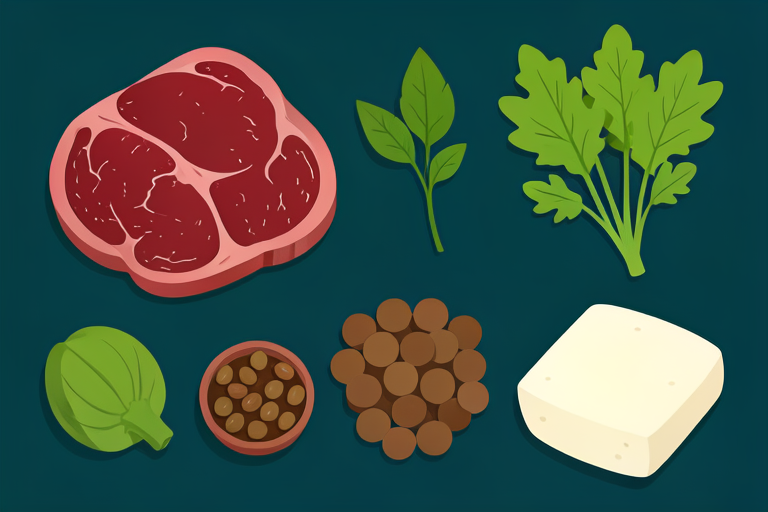
A friend once told me she ate spinach every single day and still came back anemic. The spinach wasn’t the problem. The coffee she drank with lunch was. Iron is the most commonly under-absorbed mineral in ordinary diets, and the reason is rarely how much you eat. It’s what you eat it with.
Two Kinds of Iron, and They Aren’t Equal
Food iron arrives in two chemical forms, and your gut treats them completely differently. Heme iron, from animal flesh, is absorbed at roughly 15 to 35 percent. Non-heme iron, from plants and fortified grains, is absorbed at roughly 2 to 20 percent, and that wide range depends almost entirely on what else is on the plate.
| Food | Portion | Iron | Type |
|---|---|---|---|
| Beef, lean | 3 oz | 2.2 mg | Heme |
| Chicken thigh | 3 oz | 1.1 mg | Heme |
| Canned sardines | 3 oz | 2.5 mg | Heme |
| White beans | 1 cup | 7.7 mg | Non-heme |
| Lentils, cooked | 1 cup | 6.6 mg | Non-heme |
| Firm tofu | half cup | 3.6 mg | Non-heme |
| Spinach, cooked | 1 cup | 6.4 mg | Non-heme |
| Fortified cereal | 3/4 cup | 13.5 mg | Non-heme |
Look at the beans row. A cup of white beans has more than three times the iron in a serving of beef, yet delivers less usable iron unless you pair it well. That single fact explains most of the frustration with plant-based iron sources, and it’s the same reasoning we applied when planning a week of high-protein meal prep.
What Helps Absorption
Vitamin C is the big lever. Ascorbic acid converts iron into a form the gut takes up more easily, and pairing a vitamin C source with a non-heme meal can multiply absorption several times over. Squeeze lemon over lentils. Have the orange juice with fortified cereal. Put peppers in the bean chili.
Other useful habits, in rough order of impact:
- Cook in a cast-iron pan, which adds measurable iron to acidic foods like tomato sauce.
- Soak and rinse dried beans rather than boiling straight from the bag, which lowers phytate content.
- Spread iron across meals instead of stacking it all in one dinner, since the gut’s uptake mechanism downregulates when overloaded.
What Blocks It
Three everyday culprits do most of the damage. Polyphenols and tannins in tea and coffee bind iron strongly; drinking coffee with lunch can cut non-heme absorption by 50 to 60 percent. Calcium is the other one, and it blocks both forms, which means the glass of milk with your cereal is working against the fortified iron in it. Phytates in whole grains and legumes round out the list.
None of this means giving up coffee. It means timing. Coffee before the meal or an hour after costs far less than coffee during it. If you take a calcium supplement, move it to a different meal than your iron-rich one. The same logic applies to other minerals we’ve compared, including which magnesium form to take and when.
How Much Do You Actually Need?
The NIH ODS RDA is 8 mg a day for adult men and 18 mg for menstruating women, with 27 mg during pregnancy. The upper limit for everyone is 45 mg. Postmenopausal women drop back to the male requirement, which surprises a lot of people who kept taking the same multivitamin for twenty years.
Supplements are appropriate when a blood test says so, not as a general wellness purchase. Iron toxicity is real, the symptoms are miserable, and iron overload is genetically common enough that guessing is a bad habit. Ferritin first, capsules second. Low iron also quietly raises your resting heart rate, because the heart pumps faster to move the same oxygen.
The absorption figures above come from the NIH ODS iron fact sheet, the same source registered dietitians cite in clinic. And the practical takeaway is narrower than most articles suggest: pair non-heme iron with vitamin C, and keep tea, coffee and calcium out of the same meal.
What a Real Deficiency Looks Like
Iron deficiency has a slow, unglamorous face. Fatigue that sleep doesn’t fix. A resting heart rate that creeps up. Brittle nails, hair shedding, a coated or sore tongue, and craving ice specifically – that last one, pagophagia, is oddly specific to iron and almost never appears for other reasons. Adults with type 2 diabetes or kidney disease are tested routinely, because the two conditions and iron deficiency overlap constantly.
One caution worth repeating: taking iron when you don’t need it is worse than useless. Excess iron raises oxidative stress markers, and hereditary haemochromatosis affects roughly 1 in 200 people of northern European descent, who accumulate iron quietly for decades before anything shows up on a panel.
A One-Day Sample Menu
Putting it together looks like this:
- Breakfast: fortified oatmeal with sliced strawberries and pumpkin seeds – about 8 mg of iron, plus vitamin C from the fruit.
- Lunch: lentil and pepper soup with a squeeze of lemon – roughly 7 mg, and no tea at the table. Coffee before, not during.
- Dinner: beef and tomato stir-fry cooked in a cast-iron pan – about 3 mg of heme iron, plus more leached from the pan.
- Snack: half a cup of tofu or a small handful of roasted chickpeas.
That day lands near 20 mg of mostly absorbable iron for under $6, and it clears the 18 mg requirement for menstruating women without a single capsule.
One practical note on supplements: ferrous sulfate and ferrous bisglycinate differ a lot in tolerance. The bisglycinate form causes fewer gut complaints at equivalent doses, which matters because side effects, not cost, are the main reason people stop taking it.