
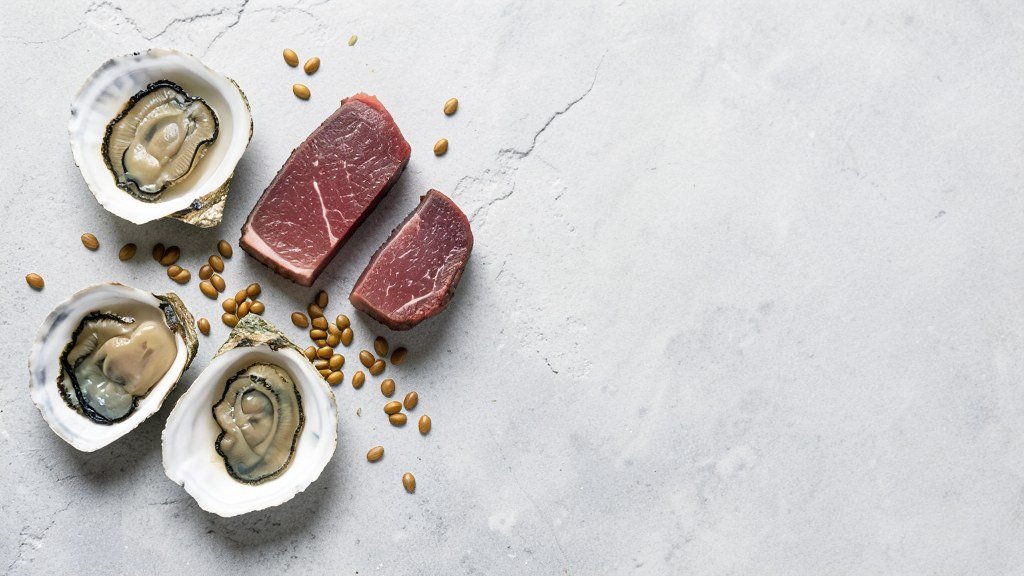
Zinc is the supplement people reach for the second a throat feels scratchy, and the one most people dose completely wrong. I used to take a 50 mg tablet every morning for six weeks – through a stretch of winter where I felt fine and then spent a week too nauseated to eat breakfast. That’s the classic zinc story: the amount on the bottle isn’t the amount your body can use, and more than that has a cost.
Here’s the actual math – how much you need, which forms get absorbed, and the mineral you quietly run out of when you overdo it.
The numbers first
The recommended intake is 11 mg/day for adult men and 8 mg/day for adult women (higher in pregnancy and lactation) – the figures summarised publicly by healthdirect’s zinc fact page and set by the US NIH Office of Dietary Supplements. The tolerable upper limit for adults is 40 mg/day from all sources – food and supplements combined. That ceiling matters because most single zinc capsules are 22 mg, 30 mg or 50 mg: one capsule already exceeds the upper limit, and a zinc lozenge course can stack on top of it.
Most people get enough without a supplement. But “most people” excludes a few specific groups, and those groups are worth checking yourself against.
How much is actually in food
| Food | Portion | Zinc (mg) |
|---|---|---|
| Oysters, cooked | 6 medium (85 g) | ~74 |
| Beef, lean, cooked | 85 g (3 oz) | ~7 |
| Crab, cooked | 85 g | ~6.5 |
| Pumpkin seeds | 28 g (1 oz) | ~2.2 |
| Lentils, cooked | 1 cup | ~2.5 |
| Chickpeas, cooked | 1 cup | ~2.5 |
| Yogurt, plain | 1 cup | ~2.3 |
| Chicken thigh, cooked | 85 g | ~2 |
| Oats, cooked | 1 cup | ~1.5 |
| Almonds | 28 g | ~1 |
Two things make this table misleading in practice. Animal zinc is absorbed far better than plant zinc, because phytates in grains and legumes bind zinc in the gut – a diet built on bread and beans can look adequate on paper and still fall short. And cooking losses are real but modest; the bigger loss is water-soluble minerals drained off with cooking water.
Which forms your body actually takes up
| Form | Absorption | Where you’ll find it |
|---|---|---|
| Zinc picolinate | Well absorbed | Premium capsules; usually the best pick for daily use |
| Zinc citrate | Well absorbed | Common, cheaper, well studied |
| Zinc gluconate | Good | Most cold lozenges; also capsules |
| Zinc acetate | Good | Cold lozenges, some wound-care products |
| Zinc carnosine | Slower release, gut-targeted | Stomach/digestion products (mostly studied in Japan) |
| Zinc oxide | Poorly absorbed | Cheap tablets, sunscreens, diaper creams – fine topically, weak orally |
| Zinc sulfate | Adequate but harsh | Budget supplements; highest rate of nausea |
If your bottle lists only “zinc” with no salt named, or lists oxide, you’re mostly buying a metallic taste and a queasy stomach.
The copper problem – why 50 mg a day isn’t free
This is the part almost nobody mentions. High zinc intake triggers metallothionein in the gut, a protein that traps copper and keeps it from being absorbed. In controlled studies, 50 mg of elemental zinc daily for four weeks produced copper deficiency in some men, along with drops in neutrophils and HDL cholesterol.
Practical translation: if you take a high-dose zinc course for a cold, that’s fine – it’s short. If you take 30-50 mg daily because a blog told you to, you’re creating a second deficiency while fixing a first one. Either stay at or under the 40 mg total ceiling, or pair long-term high-dose zinc with copper (the usual ratio is roughly 15 mg zinc to 1 mg copper).
Does the cold thing actually work?
Partially, and only under specific conditions. The Cochrane review of zinc for the common cold found a benefit mostly when zinc gluconate or acetate lozenges are started within 24 hours of symptoms at a total daily dose of about 75 mg or more – the average reduction in symptom duration was around one day, not “half a cold.” Swallowed capsules don’t do this; the effect appears to need zinc in contact with the throat.
Everything else – the testosterone claim, the acne claim, the immunity claim – splits the same way. Correcting a deficiency helps; adding more to someone already replete mostly doesn’t. The testosterone result in particular comes from studies in deficient athletes and is not a general “more zinc, more testosterone” finding.
Who should actually test or supplement
- Vegetarians and vegans – phytate-heavy diets raise the requirement by roughly a third.
- Older adults, especially with low meat intake or reduced appetite.
- Regular heavy alcohol use
- GI disease (Crohn’s, coeliac) or bariatric surgery.
- Anyone already on iron or calcium supplements – separate doses by 2-4 hours; they compete for absorption (we covered the iron side in iron-rich foods: what helps and blocks absorption).
– increases urinary zinc losses.
And take it with food unless the label says otherwise. Empty-stomach nausea is the single most common reason people quit – it was mine.
What I do now
I stopped the 50 mg habit and moved to food first: pumpkin seeds most days, beef or oysters weekly, plus a 15 mg picolinate capsule on the days I know intake is low. If a cold actually starts, I switch to lozenges for four days instead of capsules. That’s the whole protocol – and it matches what the dose-response data supports. For the rest of the supplement shelf, our probiotics vs fermented foods piece covers the same “capsule or food” question, and how much recovery muscle actually needs covers the training side of the same conversation.
Evidence note: The RDA and 40 mg upper-limit figures are the US NIH Office of Dietary Supplements zinc values (cross-checked against the linked healthdirect page), the copper-deficiency finding is from controlled zinc-depletion studies in healthy men (50 mg/day, four weeks), and the cold-duration estimate is the Cochrane review of zinc for the common cold. Individual needs vary with diet composition, gut health and alcohol intake, so a blood test beats guessing from a bottle label.